Posts

Fear the Boilerplate

Image
I recently started working on a software tool in my spear time (yea, its raining a lot this time of year). The reason I started writing it was out of necessity, so I can automate some of the tasks in my current job whilst keeping myself busy until we can travel more. I have been a Java developer for a long time and I started using NodeJS only recently. Regardless since it was a small utility tool and the world has already moved on, I decided to use NodeJS to write it. Now, I have never written a NodeJS application from scratch so far, I worked on some existing ones in my previous company, but never as a standalone console application. What I am trying to say is: I was hesitating a lot, because I had the feeling that I would drown in boilerplate code even before I start writing useful code. I needed something quick, just to finish my task and to get on with it... I read a couple of articles online and feeling confident, I started coding. Not long after, I had a basic standalone consol...


What is a project anyway?

Image
  I used to get cringes when I heard the word Project in the past. It is so undefined, so vague, yet it sounds so grandiose. It is so generalized and abused that even its definition is vague: A Project is: An individual or collaborative enterprise that is carefully planned to achieve a particular aim. Then, what is an enterprise, one might ask, so its definition is a vague recursive callback to the first definition: An Enterprise is: A project or undertaking, especially a bold or complex one. But we all intuitively know what a project is, right? It's that thing um... project managers talk about, that thing you work on... um... that thing someone plans and executes, most of the time. That thing we are late for 6 months already! See where I'm going with this? Regardless, lets switch gears a little bit, how do you feel when you have too much time on your hands? I mean when you have absolutely nothing to do, for whatever reason. You feel bored and useless, right? So you start thi...

Time is all we have

Image
  When I was growing up, capitalism was just making a breakthrough in my country, consequently our elders were still telling the centuries old mantra that: Money can't buy you happiness.  As time went by I was observing the complete opposite. To have a motorcycle you need money, to have a nice house you need money, to have a nice car you need money... so Money => Goods => Happiness. Additionally I would hear my father saying: Money are not everything in the world, but solve all the problems . Apparently this turned out to be true in most cases, except in ONE! Self value . That is the one that money can't buy. Money won't make you an expert at anything, only time and effort can. Needless to say, you can enroll in the best schools and commission the best mentors in the world, but that will not magically make you good at anything, it only gives you false feeling of accomplishment and bloated vanity. That's how far money will go, only make you a member of an expensive...

Brain matters too, bro

Image
  I have changed dozen companies in my carrier so far. Even though changing companies often was unprecedented just 20 years ago, these days is rather a common thing.  Every time I have left a company, there was a good reason, some times multiple reasons, sometimes external circumstances. Regardless, never have I ever moved to another company for more money, or other material benefits. I claim this responsibly and I stand by this rule to this day.  Every time there has been a tipping point when I have decided: I give up, not worth it, I'm leaving . And I always ask my self, what is the root cause that is pushing me over the line. There must be an underlying common problem that prevails through the years. I have often pondered: What is that thing I can't tolerate in the companies I leave?   During my last interview (or what looked like one) I had a revelation. The outside image of the company matters to me, but I appreciate the brains much more. When I say brain, ...

Team dependent

Image
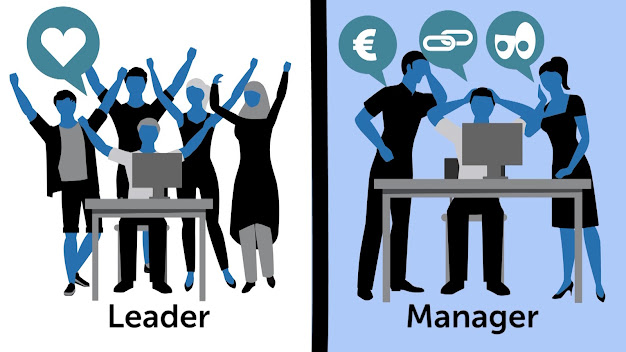
  I have had my fair share of bosses in my everyday job. I've had bad team leaders, pleasant ones, smart ones, and once I had the best team leader .   While all people desire to be needed and respected in a working environment, I have noticed generally two types of behaviors that contribute to someone being a good or a bad team leader. Don't get me wrong, at the end of the day, most of the teams/companies deliver their products, the difference is weather the team members enjoy the office time or hate it.  This desire of team leaders to be respected, needed and liked goes in two directions Leaders who know everything Approximate characteristics of these profiles: They poses great technical knowledge They don't share the knowledge unless explicitly asked. Even then, they provide vague answers and never to the point. This gives them the power of a favor, " if I told you how to do something, then you owe me " They want to be called when no one else can solve the probl...

Instant legacy

Image
  Quick throwback I have been writing code for a long time. I've been through thick and thin, even before "the internet" and I was rewriting code from paper books. Yeaaa, I've done some things I'm not proud of. Things back then went slow, we waited for Microsoft to come with an update for Visual Basic 5 so I can use my modem from code to call my friends from THE COMPUTER . All was peachy, no sudden changes, no paradigm shifting, OOP was just making a mainstream break through. I'm saying, existing developers were happy. These days There are ten different frameworks for even the smallest of tasks... Hell, a new JS frameworks is popping up every 6 Months. New kids on the block don't even know what an object is these days. Functional programming is making a come back and everybody is constantly letting arrows -> -> ->  (nerd jargon, sorry I had to) Should we keep up with the trends Not with the minor updates, but surely consider the major paradigm shi...

The elephant in the room

Image
  Once upon a project, I had a great colleague and mentor ( Michael Pellaton ) who when asked what he thinks of me, he replied: "Ilija is the kind of person that asks the right questions" . This statement stayed with me a long time after I heard it.  I then remembered my collage days, when I always asked our professors the questions nobody would dare to ask. My peers hated me for that, openly as a matter of fact. My reasoning was simple, either I understand the problem/project or I don't. I can't semi understand something, some abstract concepts maybe, but that is it. If I don't understand the problem or task, I will not be able to come up with a solution, nor I will understand a solution someone else devised. Afterwards, even the solution will appear too complicated, so I don't dare to peak inside. The "black magic box", somehow works, the output is OK. Turns out understanding the problem and getting all the angles of it, is an absolute necessity fo...